

Bibitayo Ojo-
There is a conversation happening across boardrooms and government offices in Nigeria right now. It is about data sovereignty, digital infrastructure, and the ambition to position Nigeria as the technology hub of Africa. It is an exciting conversation. It is also, if we are being direct, a premature one.
The global tech industry just handed Nigeria a cautionary tale it should study carefully.
In the United States, the world’s most powerful technology companies including Google, Microsoft, Meta, Amazon, OpenAI just signed the Ratepayer Protection Pledge at the White House, committing to build their own dedicated power supplies, fund grid upgrades, and negotiate special utility agreements. The reason? AI data centres are consuming electricity at a rate so alarming that ordinary American households were starting to feel it in their monthly bills. In a country with one of the most robust and reliable power grids on the planet, Big Tech’s energy appetite was still enough to destabilise household electricity costs and trigger a political crisis ahead of the 2026 midterm elections.
Now ask yourself: what happens when that same infrastructure lands in Nigeria?
The Numbers Are Staggering
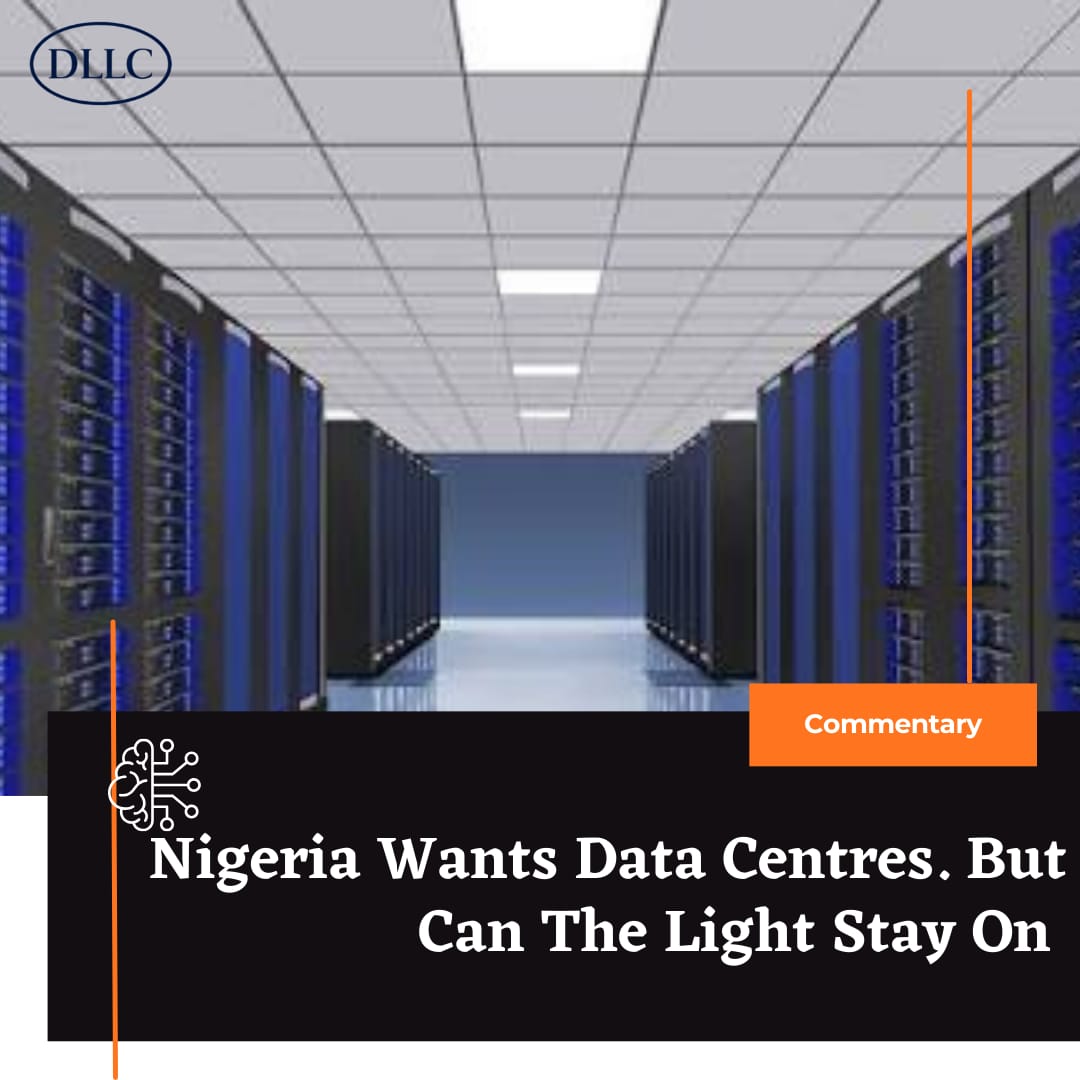
A single hyperscale data centre, the kind that powers cloud computing, AI workloads, and streaming platforms can consume anywhere between 20 to 100 megawatts of electricity. That is enough power to supply tens of thousands of Nigerian homes. Some of the largest facilities, operated by companies like Microsoft and Google, consume over 100 megawatts continuously, 24 hours a day, every single day of the year.
Nigeria’s total national grid capacity hovers around 13,000 megawatts. In practice, available generation rarely exceeds 4,000 to 5,000 megawatts on any given day. Manufacturers, hospitals, schools, and businesses already supplement this with private diesel generators at enormous cost. The grid is not just strained. It is, by any objective measure, broken.
Water is the other problem nobody is talking about. Data centres rely heavily on water-based cooling systems to prevent servers from overheating. A large facility can consume millions of litres of water daily. In a country where clean water access remains a public health crisis across multiple states, dedicating industrial volumes of water to cooling computer servers is not a trivial trade-off.
The Sovereignty Argument Has Holes
Proponents of Nigerian data centres often lead with data sovereignty, the idea that Nigerian citizens’ data should be stored and processed on Nigerian soil, not in foreign jurisdictions beyond the reach of Nigerian law. It is a legitimate and important argument. The Nigeria Data Protection Act 2023 already places requirmens on cross-border data transfers, and a domestic data centre industry would support compliance with those rules.
But sovereignty is meaningless without stability. A data centre that goes offline every time the national grid fails is not a sovereign infrastructure asset it is an expensive liability. And the cost of the diesel generators, inverters, and backup systems required to keep such facilities running in Nigeria’s current energy environment would make the economics deeply unattractive for serious investors.
What Nigeria Actually Needs First
The honest answer is that Nigeria is not ready for large-scale data centre infrastructure. Not because the ambition is wrong, but because the foundations are missing.
Power sector reform needs to move from policy documents to consistent megawatts. The transmission infrastructure that collapses under load shedding needs investment. Renewable energy solar and wind which could provide the dedicated, off-grid power supply that even American tech giants are now being required to build, needs to be fast-tracked specifically for digital infrastructure zones.
Water infrastructure and environmental regulation need to catch up. If data centres are to be built in Nigeria, there must be enforceable frameworks governing how much water they can consume and what environmental obligations they carry the kind of accountability the Trump administration is now trying to impose on Silicon Valley retroactively.
Incentive frameworks need to be honest. Offering tax breaks to attract data centre investors without first solving the power problem is offering a building without a foundation.
The Opportunity Is Real But So Is the Risk
None of this means Nigeria should abandon its data centre ambitions. Africa’s digital economy is growing faster than any other region in the world. Nigeria sits at the centre of that growth. The demand for local data processing, cloud services, and AI infrastructure on the continent is real and accelerating.
But the lesson from America’s Ratepayer Protection Pledge is that even the most advanced economy in the world struggled to manage the energy consequences of data centre growth and had to intervene politically to stop ordinary citizens from paying the price.
In Nigeria, there are no ratepayers with political lobbying power. There is no White House to sign a pledge. There are only citizens already paying too much for too little electricity, and a government whose credibility on infrastructure delivery is, at best, being rebuilt.
The question is not whether Nigeria should have data centres. The question is whether Nigeria is willing to do the hard, unglamorous work of fixing the grid, regulating water use, and building the legal frameworks that make large-scale digital infrastructure viable — before cutting the ribbon on a facility that cannot reliably stay online.
Ambition without infrastructure is just a press release.
DL Legal Consults provides expert advisory on data protection compliance, digital regulation, and corporate matters in Nigeria.
📧 info@digitallord.com.ng
DL Legal Consults — Your Trusted Legal Partner for Data Protection Compliance and Corporate Matters.




Leave a Reply